At the same time, concern is growing over data that still needs to remain confidential ten years from now, while quantum-safe encryption is only just taking shape. Quantum technology is increasingly being mentioned as part of the answer to that. For us at Xylos, that was reason enough to send Sam de Waegeneer and Frank Dierckx to the event "Quantum technology is here to stay, today!" hosted by ADM on May 28 at Living Tomorrow. Frank shares his observations below.

:focal())
Honestly: I walked in with a healthy dose of skepticism. To many CIOs and IT managers, quantum still sounds like something vague, something that becomes relevant "someday later." What I took away after half a day of sessions is exactly the opposite. Quantum is already relevant today, in some domains even already usable, with choices organizations need to make now to avoid falling behind tomorrow.
Four speakers walked us through the different dimensions of quantum: sensing, processing, exploration and readiness. Below are the insights that seem most relevant to our clients.
A market accelerating faster than expected
The tone was set right away with a clear market snapshot. By 2035, quantum technology could create up to 2.3 trillion euros in economic value. The quantum computing market itself is growing at a CAGR of 27 percent. Worldwide, more than 300 companies are already actively experimenting or investing in the technology, with a strong concentration in energy, materials, pharma, healthcare, finance and logistics.
What stands out: quantum is shifting from research toward what speakers call a "commercial tipping point." In particular, hybrid models, where classical computing is complemented with quantum (or quantum-inspired) algorithms, are already delivering concrete value today.
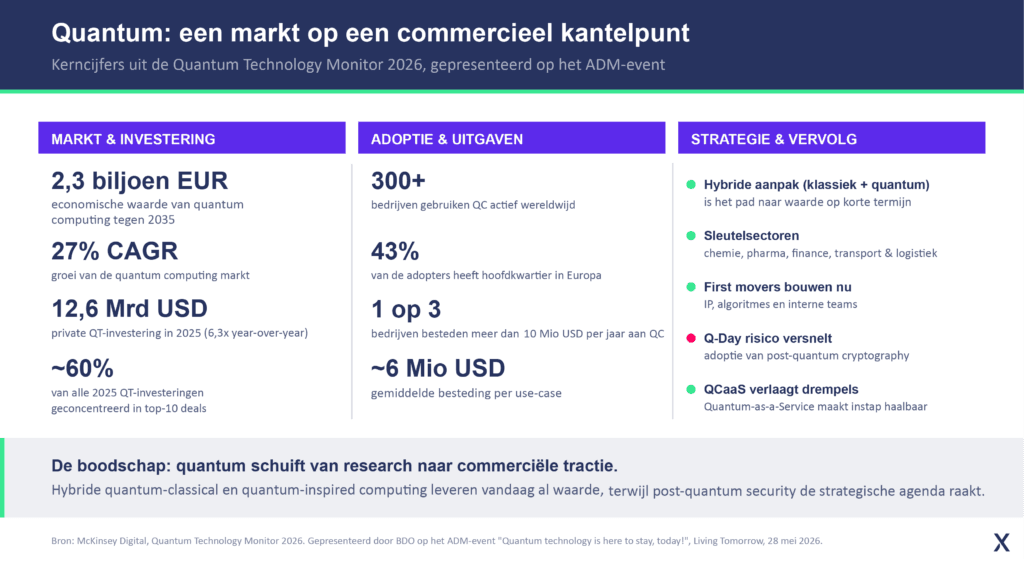
Source: McKinsey Digital, Quantum Technology Monitor 2026, presented by BDO at the ADM event in Living Tomorrow.
Q-Sensing: value you can bank on today
Walter Vanherle, Partner at BDO Belgium and Transport & Industry Market Lead at Quantum Circle, offered a nuance I found important. Quantum sensing already delivers direct business value today. Think ultra-precise timing via quantum clocks (critical for telecom, energy grids and financial transactions), gravitational sensors that detect underground infrastructure or pipelines, inertial navigation without GPS, and RF sensing for security and medical applications.
For organizations wanting to get started with quantum, sensing in practice often turns out to be the first, low-threshold entry point.
Q-Processing: where quantum makes the difference today
Mark Thienpont, Lead Expert Data Science & AI at delaware BeLux, addressed quantum computing for complex optimization problems, and this is where things got really concrete. Today, companies structurally run into the limits of classical computing. As many as 81 percent of organizations use simplifications or heuristics. Problems get split into sub-problems, simplified, or solved "good enough." The result: suboptimal decisions that cost money.
Quantum, and specifically quantum-inspired techniques, targets exactly that gap. Combinatorial optimization, complex decision problems and real-time decision-making suddenly become achievable. The use cases discussed speak for themselves:
KWR (water networks): optimal placement of sensors in networks with an exponentially large search space.
UNILIN: truck loading optimization that goes beyond the usual "90 percent full" rules of thumb.
LINEAS (rail): real-time replanning during disruptions, in under a minute.
Elia: outage planning in complex energy networks.
The biggest commercial traction today lies with quantum-inspired computing: classical hardware, but with algorithms inspired by quantum principles. Accessible, scalable and proven.
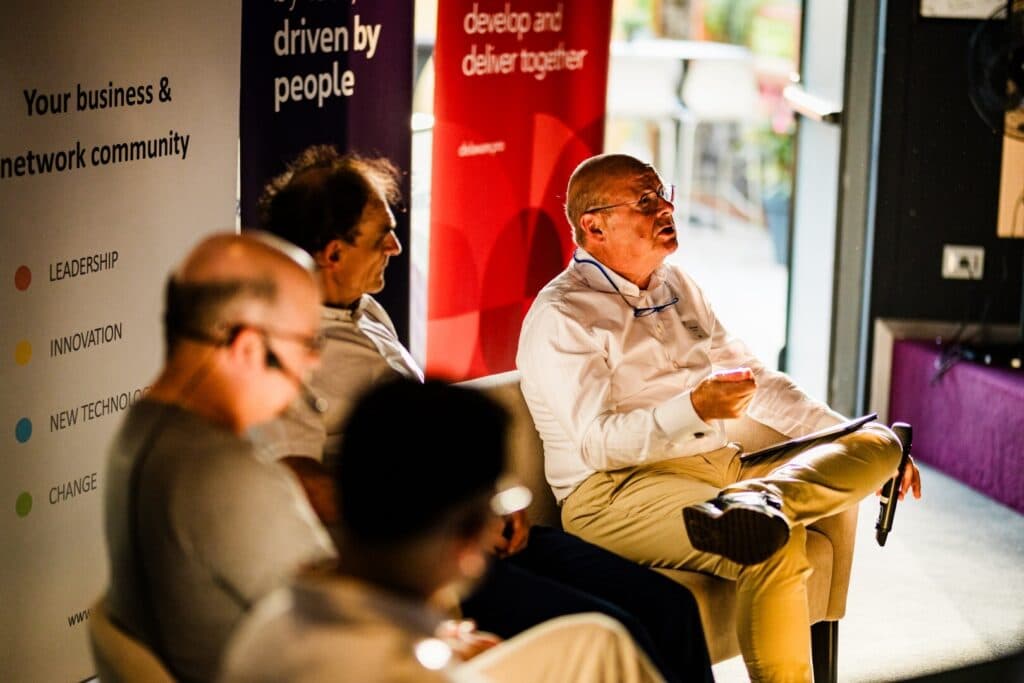
Source: ADM.
Q-Exploration: the wider ecosystem in view
Eric Michiels, Account Technical Leader & Quantum Ambassador at IBM, placed quantum within a broader ecosystem. The landscape is layered: hardware (qubits, cryogenics, photonics), software and algorithms, and cloud providers such as Azure, AWS and Google. The technological complexity is real. Some systems require cooling down to millikelvin levels, others bet on laser-based alternatives.
In the longer term, the biggest breakthroughs lie in molecular simulation and drug discovery, new materials for batteries and energy, AI and machine learning, and cybersecurity. For pure quantum computing, we'll still need a few more years of patience here. But the direction is clear.
Q-Readiness: the strategic question
The closing talk by Elias Oumouadène, AI Strategy Manager at BDO Belgium, addressed what I personally found the most important message of the day: how do you prepare your organization? The drivers are clear: sharply rising public and private investment, growing demand for competitive advantage, and the rise of Quantum-as-a-Service models.
But the risks are just as real. There's a shortage of quantum talent. The technology remains complex. And a migration toward quantum-safe security, or post-quantum cryptography, is coming. Anyone encrypting sensitive data today with classical encryption needs to reckon with the fact that this protection will eventually no longer be enough. This phenomenon, sometimes referred to as "Q-Day," calls for preparation long before it arrives.
The strategic actions that were proposed feel familiar to anyone who has guided cloud or AI transformations before:
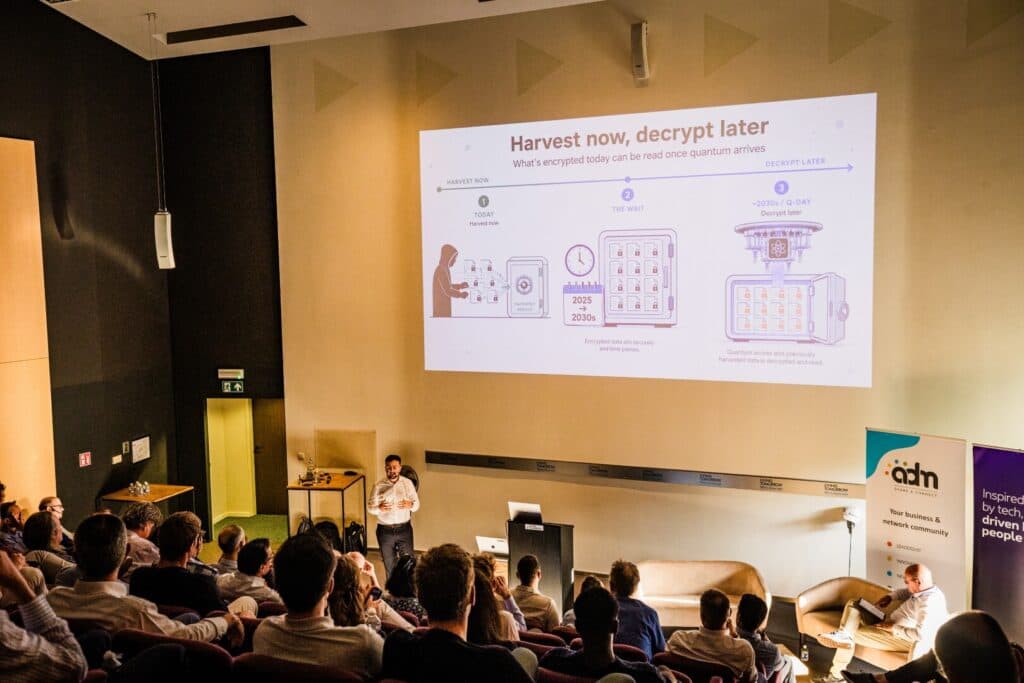
Source: ADM.
Our takeaway
What Sam and I took away most is the shift from theory to concrete business use cases. The speed at which optimization use cases are gaining traction was, for me, the biggest eye-opener. The clarity that hybrid (classical plus quantum) is the way forward suddenly lowers the barrier to getting started significantly.
For organizations in sectors like logistics, energy, manufacturing and finance, the message is clear. Quantum starts today. The biggest mistake you can make is waiting until the technology feels "mature." By then, others will already have built a lead in use-case knowledge, talent and partnerships that will be hard to catch up on.
In closing
As far as I'm concerned, the right question is therefore this: "which decisions do we make today to stay ahead tomorrow?" That calls for a clear-eyed look at where quantum can already deliver value today (sensing, optimization, hybrid workloads), and where it still requires an investment in time and knowledge.
At Xylos, we follow these developments closely, so we can help our clients take the right steps at the right time. Want to brainstorm about this with our team? Let us know, we'd love to stop by.
Source: ADM.
Source: ADM.
About the author
Frank Dierckx is Partner Alliance Manager at Xylos and follows the evolution of infrastructure, partner ecosystems and emerging technologies. His expertise helps clients make technology choices that are technically sound and economically justified.