Gradient blur
Blog
Data & Analytics
Managed Services
Back to overview

Why data is your best decision in uncertain times

Uncertain times always force us to do the same thing: slow down for a moment and recalibrate. We're right in the middle of it again. Geopolitical tensions are rising, economic pressure is increasing, and technology is evolving faster than organizations can keep up with.
01 - 04 - 2026

And yet it doesn't feel new. The corona period, the energy crisis, and the raw material shortages are still fresh in our memory. We've been through this kind of shock before. And time and again, the same thing became clear: certainty is temporary, adaptability is structural.

Maybe that's exactly where the confidence lies.

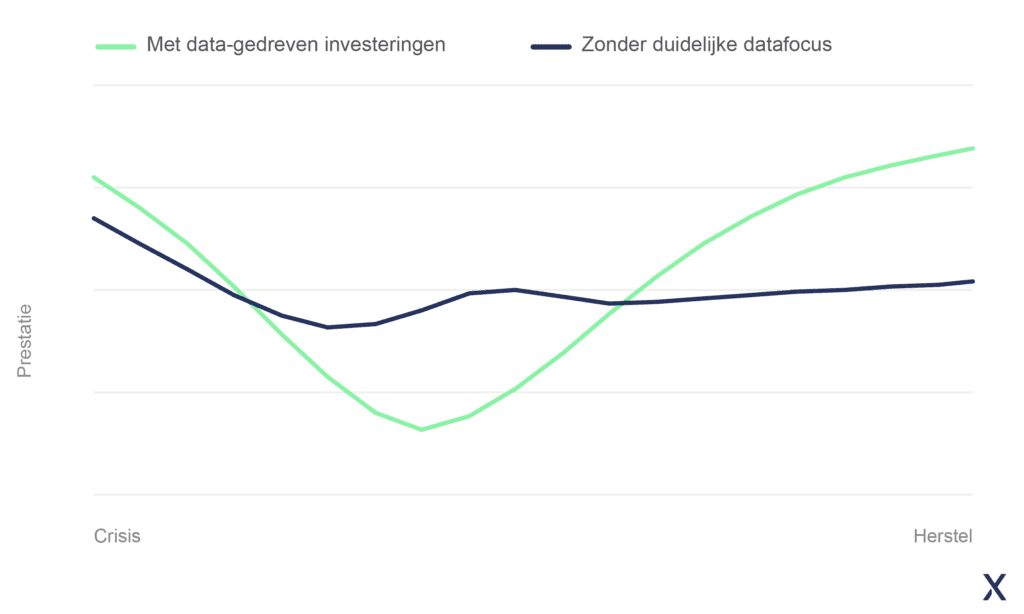
Organizations that kept investing deliberately during previous crises are stronger today. Not because they could predict the future, but because they understood better what was happening. And especially why it was happening.

Data played a key role in that, every time.
What previous crises teach us

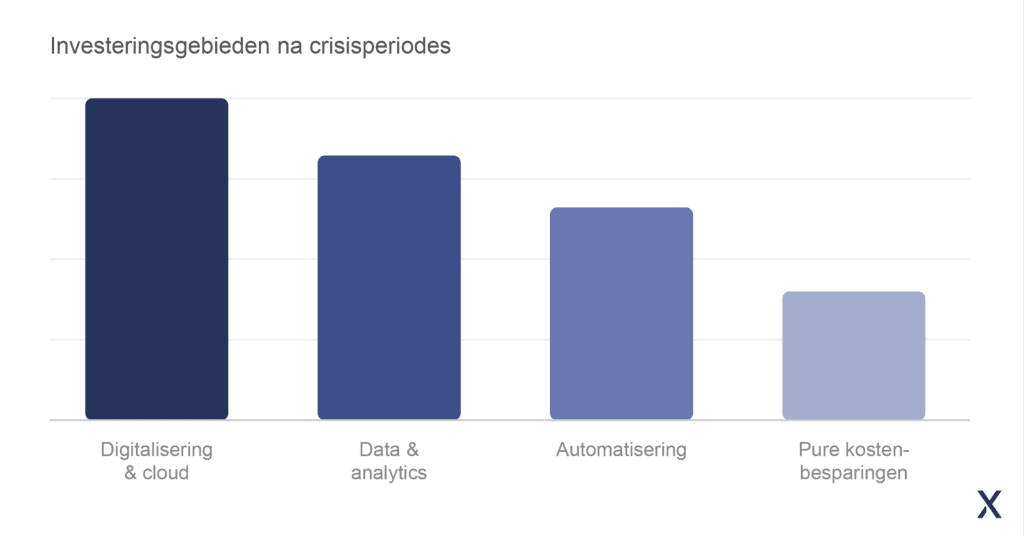
Looking back, clear patterns emerge. Companies that kept investing in digitalization and data infrastructure recovered faster. Organizations that cut costs blindly, without insight into exactly what they were cutting, lost agility. Those who invested in customer data and behavioral analysis could respond more quickly to changing needs.

The difference isn't in the fact that investments are made. The difference lies in the quality of the insights that guide those investments.

Data does what gut feeling can't

Data makes visible what otherwise remains vague. What starts as a feeling or hunch becomes concrete and testable. Think of how customers behave, how inventory evolves, or where sales are effectively growing or stalling. Suddenly you see patterns instead of assumptions. And that changes how you make decisions.

Data speeds up decisions at moments when doubt would normally take over. When insights are available in real time and clearly visualized, you need less endless alignment or confirmation. The direction becomes clearer, allowing organizations to shift gears faster.

Data provides grounding where noise dominates. Through segmentation, predictive models, and risk analyses, structure emerges from what would otherwise remain noise. You gain visibility into what has priority, where opportunities lie, and where it's better to wait.

Relevant today, valuable tomorrow

What makes this period different is the pace. Technology is evolving faster than ever and putting extra pressure on organizations. At the same time, the possibilities are greater than ever. Data is therefore no longer a nice-to-have. It has become a basic requirement for organizations that want to build for the future.

The same foundations that help navigate uncertainty today form the basis for innovation tomorrow. You already see that today in AI. The question is gradually shifting. It's no longer about whether you get started with it, but about the quality of the data you build on. That deserves a post of its own.

For now, the conclusion is clear. Data is no longer a supporting layer. It's the key. When data is available and used correctly, it becomes an engine for growth and innovation, regardless of the context in which you operate.

Want to know more?

Want to know more about how to turn data into concrete insights and embed this structurally in your organization? Discover our approach to Data & Analytics or see how we support this through Managed Services.

About the author

Peter Verrykt is Data & Analytics Business Lead at Xylos and guides organizations in turning data into concrete business value. He helps companies look beyond technical implementations and use data as a foundation for better decisions, greater agility, and sustainable growth.