:focal())
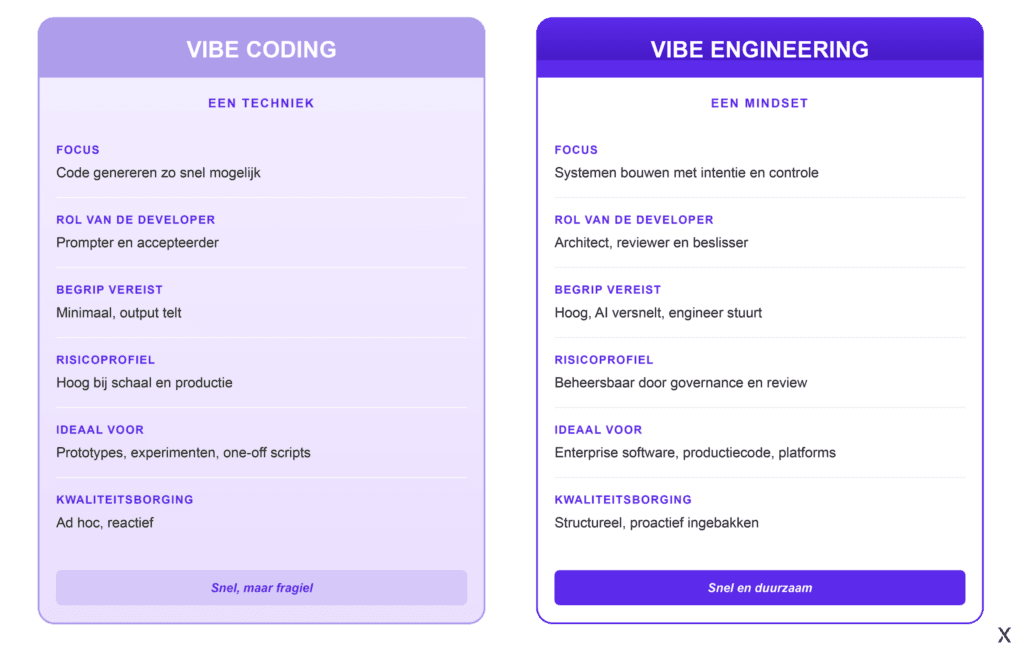
A developer proudly shows me his latest creation. In three weeks, he built an AI agent that merges reports from four internal systems. The demo works flawlessly. Management is impressed. Three months later, the same agent is in production and a ticket escalates: the numbers in the weekly board meeting no longer add up. Nobody can reproduce where the agent gets its data from. The developer explains, honestly: "I had Copilot generate that whole part. It worked, so I left it as is."
A story like this is rarely about a bad engineer. It's about an industry that's changing at breakneck speed, and about how you respond to that as an organization.
This is the fifth article in our series on data and AI. In the previous parts, we looked at AI sprawl in organizations, the Power Platform as a bridge to controlled AI integration, the data foundation with Microsoft Fabric and grounded AI as an architectural approach. Each time, technology was the focus. This time, we look at the people who work with it. Because without the right mindset, every technical investment stays an experiment that will eventually derail.
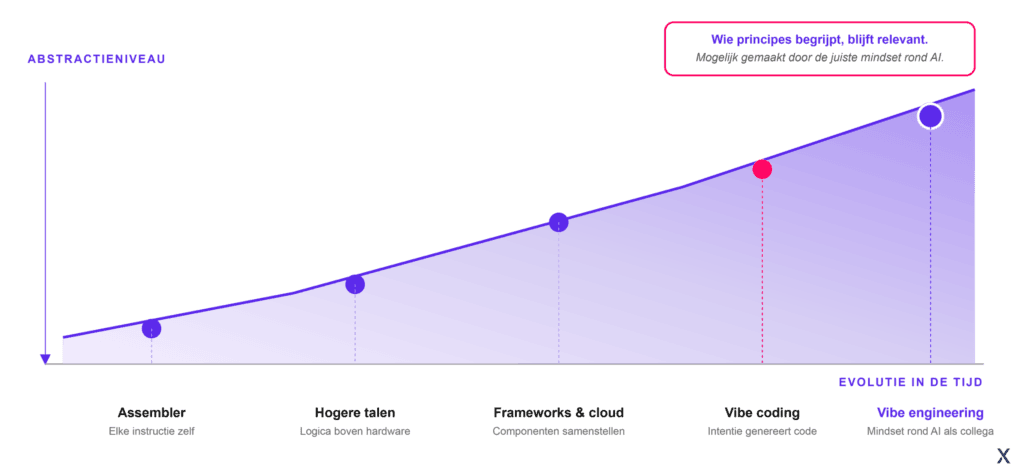
The vibe-coded agent from our first article isn't just a footnote. It's symptomatic of a fundamental shift in how software gets built today, and how it needs to be maintained tomorrow.